Top 10 Sachet Machine Manufacturers for Global Buyers
Sachet Machine demand is growing with single-serve products, compact shipping formats, and changing consumer routines. Grand View Research valued the global flexible packaging market at approximately USD 268 billion in 2023, with continued growth expected through 2030. Smithers also identifies convenience, lightweight materials, and improved pack performance as important packaging trends. These signals explain why buyers are examining sachet equipment more carefully.
Speed alone is not enough. A dependable Sachet Machine must control film tension, sealing temperature, filling accuracy, and changeover time. On a factory floor, small errors become visible quickly: crooked seals, powder trapped in the seal, or ten grams missing from every hundred packs. PMMI Vice President Jorge Izquierdo has expressed a useful principle: “Automation must solve a business problem, not simply add technology.”
That principle shapes this guide to the Top 10 Sachet Machine Manufacturers for Global Buyers. The selection considers machine stability, dosing technology, format flexibility, after-sales support, spare-parts access, and documented production experience. It also considers compliance with recognized food-packaging and machinery-safety expectations. No ranking can fit every factory. A liquid producer may value servo-driven dosing, while a seasoning plant may prioritize dust control and fast cleaning.
Market forecasts are not perfectly consistent. Some reports measure sachet packaging separately, while others group it within flexible packaging. That limitation deserves attention. Buyers should verify output claims through factory trials, sample testing, and transparent total-cost calculations before signing a purchase order. A polished brochure is not proof of reliable production. Real performance appears during long runs, difficult materials, and unplanned changeovers.
What Sachet Machines Are and How They Support Modern Packaging
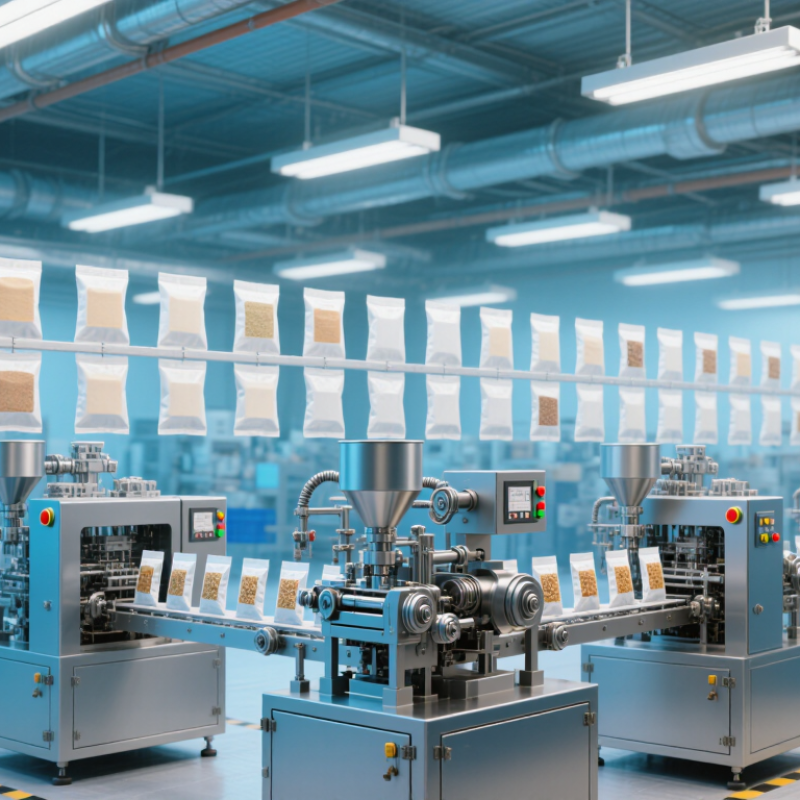
A sachet machine forms, fills, seals, and cuts small flexible packages. It can handle powders, granules, liquids, and viscous products. Film moves through the machine in measured stages. A dosing system controls the product volume. Heated jaws then create the seals.
Small details matter.
Modern equipment supports consistent portioning, cleaner handling, and faster production. Many models include film sensors, temperature controls, date coding, and automatic fault alerts. These features reduce waste when settings remain stable. They also help operators identify weak seals before shipments leave the facility. However, performance depends on product behavior, film quality, and correct calibration.
Global buyers comparing the top ten sachet machine manufacturers should inspect more than speed claims. Ask for test runs using the actual product and packaging film. Review changeover time, cleaning access, spare-part availability, and technical training. A compact machine may suit several products, but frequent adjustments can reduce its real output. That trade-off is easy to miss.
Reliable suppliers provide documented specifications, factory acceptance testing, and responsive service. Electrical standards and safety systems must match the destination market. Data records can support quality checks and maintenance planning. Still, automation is not a substitute for skilled operators. Even a well-designed machine may produce inconsistent packs when humidity changes or dosing material bridges. Buyers should leave room for trial results, because brochures rarely show every production limitation.
Key Criteria for Evaluating Sachet Machine Manufacturers Worldwide
Top 10 Sachet Machine Manufacturers for Global Buyers
When evaluating sachet machine manufacturers worldwide, buyers should examine evidence, not polished brochures. PMMI’s 2024 State of the Industry report valued North American packaging machinery shipments at approximately $10.2 billion in 2023. That scale reflects strong demand, but it also increases supplier differences. Ask for factory acceptance test records, verified output data, and sealing results using your actual film. A machine rated at 120 sachets per minute may perform differently with humid powders or narrow seals.
The best evaluation starts with product fit.
Check dosing accuracy, seal integrity, changeover time, cleaning access, and rejected-pack rates. EU Machinery Regulation requirements, electrical certifications, and documented risk assessments also deserve review. Smithers’ flexible packaging research continues to identify sustainability and material reduction as major market pressures. Therefore, confirm whether the machine handles thinner films without unstable sealing. Small details matter.
Service evidence is equally important. Request spare-parts lead times, remote-support response targets, technician coverage, and training records. Total cost includes energy use, compressed air, tooling, film waste, and downtime. A 2024 report from the International Society of Automation highlights the growing role of connected production data in manufacturing decisions. Still, digital dashboards cannot repair poor mechanical design. I would also test the machine under difficult conditions, not only during a perfect demonstration. That step is often skipped.
Top 10 Sachet Machine Manufacturers and Their Core Strengths
Sachet machine buyers need more than speed claims. The leading ten manufacturers distinguish themselves through dosing accuracy, sealing stability, and dependable after-sales support. This matters as flexible packaging demand grows. Smithers projects the global flexible packaging market will exceed US$300 billion by 2028. That growth increases pressure on machine uptime and changeover efficiency.
Several manufacturers focus on high-speed multi-lane systems. Their strengths include servo-driven filling, automatic film tracking, and precise temperature control. Others build compact machines for powders, liquids, and granules. These models suit smaller production rooms and frequent product changes. PMMI reported that U.S. packaging machinery shipments reached approximately US$11.3 billion in 2023. The figure reflects strong investment in automation, but it does not guarantee equal machine quality.
Practical testing remains essential. Ask each manufacturer for seal-strength results, dosing variation, cleaning time, and documented running speed. A machine rated at 120 sachets per minute may perform differently with sticky powder or thin film. Not every supplier measures output under the same conditions. That is a weakness buyers should question.
Manufacturers with remote diagnostics, local technicians, spare-parts planning, and operator training offer stronger long-term value. EUROMAP and ISO-based documentation can also improve technical comparison, although paperwork alone cannot replace a factory trial.
Machine Types, Packaging Formats, and Industry Applications
Top 10 Sachet Machine Manufacturers for Global Buyers
Machine Types, Packaging Formats, and Industry Applications
Sachet machines vary widely in speed, dosing accuracy, and changeover design. Intermittent-motion machines suit modest output and frequent product changes. Continuous-motion models support higher volumes with stable film movement. Multi-lane systems produce several sachets per cycle, but they require careful synchronization. Rotary platforms can reduce floor space. They may also make maintenance less convenient.
Packaging format should match the product and user experience. Three-side and four-side seal sachets work well for powders, granules, and small liquid portions. Stick-pack machines create narrow packs for drink mixes, sweeteners, and instant supplements. Flat sachets fit samples, wipes, and personal-care formulas. A weak seal ruins a good filling system. Seal temperature, pressure, and dwell time need regular checks. Small differences in film thickness can cause surprising defects.
Industry requirements shape the machine choice. Food applications need cleanable surfaces, dust control, and accurate auger or volumetric dosing. Pharmaceutical packaging demands stronger documentation, repeatable filling, and controlled inspection procedures. Cosmetics may require gentle handling for creams, gels, or viscous lotions. Beverage powders often need dust extraction and anti-bridging solutions. In my view, quoted speed is not enough. Real output falls during film changes, cleaning, and minor stoppages. Buyers should request test runs with their actual product. No machine is perfect. A detailed service plan, accessible spare parts, and operator training often matter more than a higher headline speed.
Top 10 Sachet Machine Manufacturers for Global Buyers
Machine types, packaging formats, and industry applications
This chart compares indicative production-speed ranges commonly associated with major sachet machine categories. Actual output depends on product characteristics, sachet size, filling accuracy, sealing configuration, lane count, and local packaging requirements. Stick packs and strip packs generally support higher throughput, while premade-pouch systems prioritize format flexibility and product protection.
How Global Buyers Can Compare Suppliers and Select the Right Machine
Top 10 Sachet Machine Manufacturers for Global Buyers
How Global Buyers Can Compare Suppliers and Select the Right Machine
A strong supplier comparison starts with production evidence, not attractive brochures. PMMI’s 2024 State of the Industry report valued U.S. packaging machinery shipments at about $11.3 billion in 2024. This scale reflects rising demand for automation, consistency, and shorter changeovers. Global buyers should request verified output figures for their actual sachet material, filling volume, and product density. A machine rated at 120 sachets per minute may run slower after sealing, coding, and inspection are included.
Ask suppliers for factory acceptance testing records, seal-strength results, dosing accuracy, and changeover times. Check whether operators can adjust the machine without specialized tools. Also examine spare-parts availability, remote support hours, electrical standards, and training documents. These details often matter more than headline speed. Very much so.
Smithers’ flexible packaging market research identifies sustainability and material efficiency as continuing industry priorities. Therefore, compare film waste, compressed-air use, energy consumption, and compatibility with recyclable structures. Request data from a full production trial, not a short demonstration. I have found that small leaks appear after several hours, not during a polished sales test.
A useful scorecard can assign separate weights to reliability, service response, total ownership cost, and compliance documentation. Certification alone does not prove practical performance. Review references from factories with similar climates, labor skills, and product formats. The cheapest quotation may become expensive after repeated stoppages. Supplier rankings help, but they should not replace technical judgment.