


ProMach is your partner from start to finish. Our product brands are grouped into distinct business lines that make the most sense to our customers, covering every function of the production line: Filling, Bottling & Capping, Decorative Labeling, Flexibles & Trays, Pharma, Handling & Sterilizing, Labeling & Coding, Robotics & End of Line, and Systems & Integration.
learn more


10 Best Aluminum Can Lid Suppliers for Global Buyers
Global demand for lightweight, recyclable packaging is reshaping beverage supply chains. Grand View Research valued the global aluminum cans market at approximately USD 54.3 billion in 2023. It also projects continued growth through 2030. Behind every reliable can is a small component with major responsibilities: the Aluminum Can Lid.
A lid must resist pressure, protect the filling, and open smoothly. Tiny scoring lines matter. So do tab strength, coating adhesion, and dimensional consistency. The International Aluminium Institute reports that recycling aluminum can save about 95% of the energy required for primary production. That advantage increases the importance of responsible material sourcing and closed-loop recycling. However, sustainability claims still need evidence. Marketing language alone is not enough.
Robert Budway, president of the Can Manufacturers Institute, described aluminum packaging as “the most recycled beverage container in the world.” His observation highlights a practical sourcing question: can a supplier deliver both performance and measurable environmental responsibility? This list of the 10 Best Aluminum Can Lid Suppliers for Global Buyers examines that question through manufacturing capacity, alloy control, tooling experience, quality systems, delivery reliability, and documentation.
Some suppliers look impressive on paper. Reality can differ.
Buyers should request recent test reports, coating specifications, production samples, and references from comparable markets. ISO certification helps, but it does not replace process auditing. A strong supplier should explain how it controls curling, leakage, tab alignment, and pallet damage. Regional logistics also deserve attention, especially when lids cross multiple borders before filling.
The right choice is rarely the cheapest quotation. It is the supplier that delivers consistent lids, transparent data, and fewer unpleasant surprises.
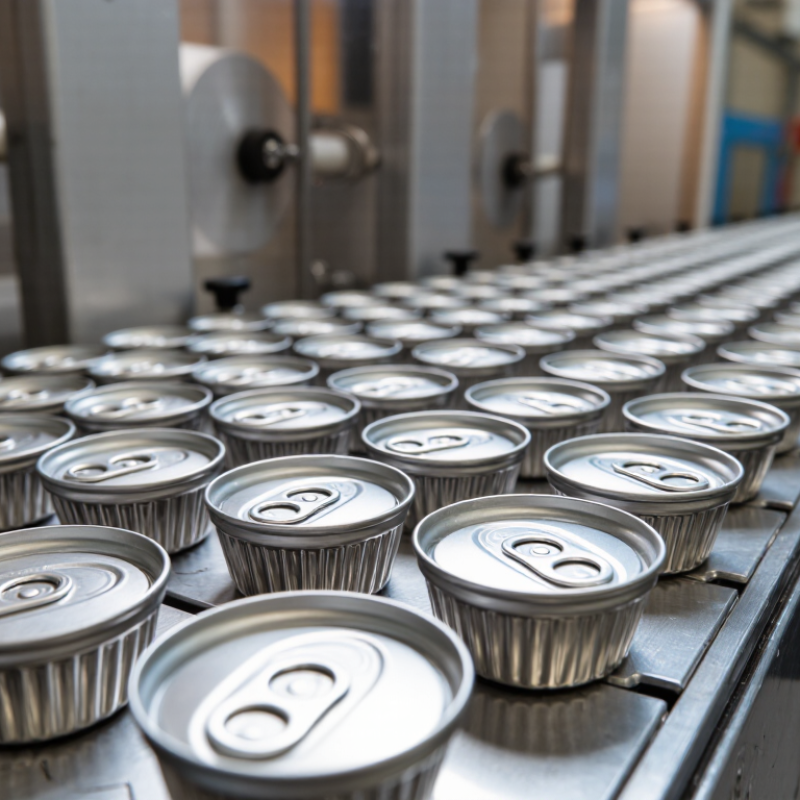
Types of Aluminum Can Lids and Their Common Applications
Aluminum can lids differ by opening style, sealing method, and product environment. Standard stay-on-tab ends suit carbonated drinks, energy drinks, and bottled-water alternatives. Their attached tabs reduce loose metal waste during disposal. Full-aperture ends create a wider opening for soups, beans, and ready-to-eat meals. Peelable lids use a flexible aluminum layer, making them practical for dairy cups, powdered foods, and small portion packs. Screw-on aluminum closures are less common, but they support resealable products such as specialty drinks and dry ingredients.
Application conditions matter more than appearance. Beverage ends need strong pressure resistance and smooth tab movement. Food can ends require reliable sealing against moisture, oxygen, and processing heat. According to European Aluminium’s 2023 recycling data, beverage can recycling in Europe reached about 76% in 2022. That figure supports the value of recyclable lid designs, although collection rates vary widely between regions. The International Aluminium Institute reports that recycled aluminum uses about 95% less energy than primary aluminum production.
Global buyers should also compare coating compatibility, alloy thickness, tab force, and filling-line speed. A lid that works well for cold drinks may fail under retort processing. Small details matter. Supplier data sheets can be incomplete. Testing real samples remains essential. Even experienced buyers sometimes overvalue unit price and underestimate seal failures, transit dents, or difficult opening performance. A practical evaluation should include pressure testing, corrosion checks, opening trials, and compatibility with the intended can body.
10 Best Aluminum Can Lid Suppliers for Global Buyers - Types of Aluminum Can Lids and Their Common Applications
| No. | Aluminum Can Lid Type | Common End Designation | Typical Nominal Size | Opening Style | Typical Material and Finish | Common Applications | Important Buyer Checks |
|---|---|---|---|---|---|---|---|
| 1 | Standard Stay-on-Tab Beverage End | 202 / 202 CDL | Approximately 52–54 mm can-end class | Partial tear-open opening with retained tab | Drawn and scored aluminum end; commonly aluminum alloy 5182 for the end; internal and external protective coatings | Carbonated soft drinks, beer, energy drinks, sparkling water, and juice-based beverages | Confirm seam compatibility, score depth, tab geometry, pressure resistance, coating compliance, and filling-line speed. |
| 2 | Reduced-Diameter Beverage End | 202 CDL or equivalent reduced-diameter format | Usually used with modern slim-wall beverage cans | Standard retained ring-pull tab | Light-gauge aluminum end with scored opening panel and food-contact coating system | Mainstream carbonated beverages and single-serve cans designed for material reduction | Check exact end diameter, countersink depth, tab opening force, buckle resistance, and compatibility with the can maker's seamer. |
| 3 | Large-Opening Beverage End | 206 / 209 beverage end | Approximately 57–65 mm can-end class, depending on format | Expanded partial opening for faster drinking or pouring | Aluminum alloy end with reinforced countersink, score panel, and protective lacquer | Premium beverages, craft beer, ready-to-drink products, and cans marketed for direct drinking | Evaluate opening area, tab ergonomics, score consistency, splash performance, and transport durability. |
| 4 | Wide-Mouth Beverage End | 200 / 202 wide-mouth format | Commonly based on beverage can-end sizes near 52–54 mm | Large scored opening with retained pull tab | Higher-strength aluminum end design with internal coating and external printed or varnished finish | Thick beverages, sports drinks, functional beverages, and products intended to be consumed directly from the can | Confirm opening force, exposed-edge safety, product splash control, score-panel integrity, and tab retention. |
| 5 | Large Easy-Open Food End | 211 / 300 food-can end class | Approximately 68–76 mm nominal end class, depending on specification | Partial or near-full opening using a ring-pull tab | Aluminum easy-open end, often with a BPA-NI or epoxy-based food-contact coating system | Canned vegetables, fruit, beans, pet food, seafood, sauces, and ready meals | Check retort performance, coating resistance to acidic or salty foods, opening force, panel deformation, and seam specifications. |
| 6 | Small Easy-Open Food End | 202 / 206 / 209 food-end formats | Approximately 52–65 mm nominal end class | Ring-pull partial opening or small pour opening | Aluminum end with scored panel, tab, countersink, and food-contact internal lacquer | Single-serve fruit, seafood, pâté, sauces, condiments, and specialty food portions | Verify product acidity, sterilization temperature, tab accessibility, corrosion resistance, and compatibility with the selected can body. |
| 7 | Full-Aperture Easy-Open End | Large-format full-open end | Usually selected for medium or large food cans | Nearly the entire end panel is removed or opened | Reinforced aluminum end with full-aperture score design and protective food-contact coating | Pet food, bulk ingredients, catering packs, processed foods, and products requiring spoon or utensil access | Assess panel stiffness, safe-edge design, opening force, retort resistance, and protection against accidental opening. |
| 8 | Pour-Opening Can End | 206 / 209 / 211 specialty end formats | Selected according to the can body and required pour area | Controlled opening designed for pouring rather than direct drinking | Coated aluminum end with reinforced score geometry and tab or opening feature | Powdered products, cooking ingredients, beverages for shared serving, and liquid food products | Confirm pour direction, opening dimensions, residual-metal safety, score-panel stability, and lid-to-can seam fit. |
| 9 | Peelable Aluminum Foil Lid | Heat-sealed foil membrane or foil-laminate lid | Diameter is customized to the cup, tray, or can mouth | Peel-open tab; no scored metal panel required | Aluminum foil commonly combined with polymer sealant, printed lacquer, or laminate layers | Dairy products, instant foods, sauces, nutritional products, pharmaceuticals, and portion packs | Check seal compatibility, peel strength, pinhole control, oxygen and moisture barrier, sterilization conditions, and recycling requirements. |
| 10 | Specialty Resealable Can Lid | Custom aluminum end with secondary closure | Custom diameter and opening geometry | Pull-open panel combined with a plastic, metal, or composite resealing feature | Aluminum end with protective coating and an application-specific secondary closure | Powdered beverages, coffee, snacks, specialty nutrition products, and multi-use packaged goods | Evaluate reseal performance, leakage prevention, closure durability, tamper evidence, dimensional tolerances, and custom tooling lead time. |