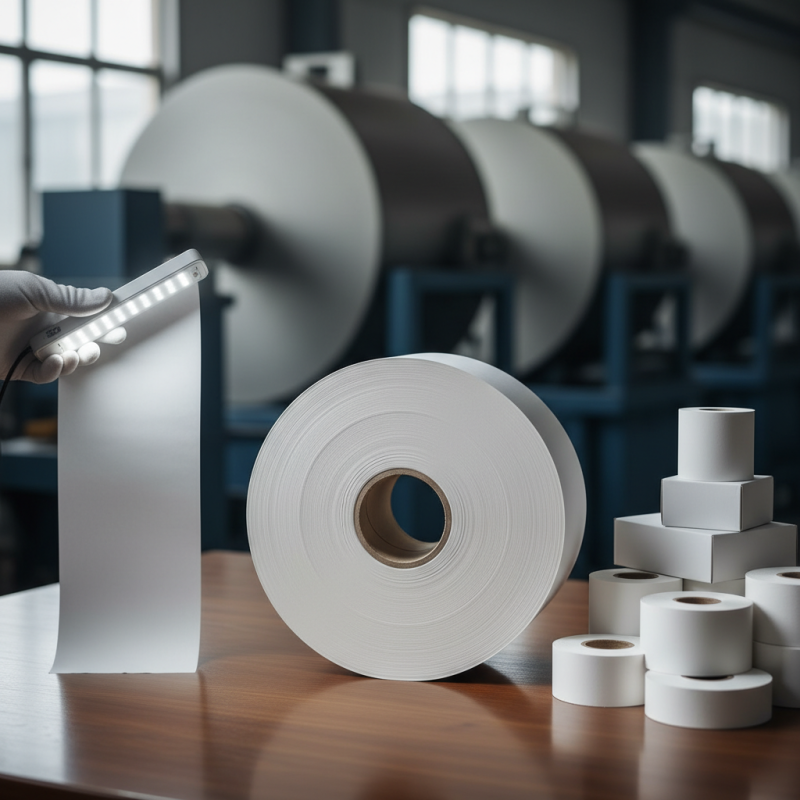
What is a Thermal Paper Roll Manufacturer and How to Choose One?
Choosing a thermal paper roll manufacturer can be challenging. Many options exist, each with unique features. It’s vital to understand what differentiates one manufacturer from another.
Quality is a major consideration. A trusted thermal paper roll manufacturer will use high-grade materials. This ensures durability and print effectiveness. Pricing matters, too. Some manufacturers offer lower prices, but at what cost? It's important to balance quality with affordability.
Communication with the manufacturer is crucial. Can they answer your questions promptly? Are they transparent about their production processes? Reflecting on these factors will help you make a more informed decision. A poor choice could impact your business operations significantly.
Understanding Thermal Paper: Definition and Uses
Thermal paper is a special type of paper that changes color when exposed to heat. It's commonly used for receipts, labels, and tickets. This paper is coated with a heat-sensitive chemical that reacts to the print head of a thermal printer. When the print head heats, it causes the coating to darken, creating text or images.
The uses of thermal paper are vast. Retailers often utilize it for efficient printing of sales receipts. Many businesses in logistics use thermal labels for shipping and inventory tracking. Additionally, food establishments might print orders directly for their kitchens. The quick turnaround and clean results are appealing. However, the longevity of thermal prints is a concern since they can fade over time, particularly with exposure to sunlight or heat.
Choosing a thermal paper roll manufacturer requires careful consideration. Look for suppliers with strong reputations. Think critically about the quality of their paper and the consistency in their products. It's not just about the price; the long-term performance matters. Some rolls might jam or cause issues in printers. These factors can lead to operational hiccups, impacting your business.
Key Features of Thermal Paper Rolls for Businesses
When selecting thermal paper rolls for a business, clarity and durability are crucial. According to a report by Smithers Pira, the global market for thermal paper is projected to reach 5.4 billion USD by 2026. This growth highlights the increasing demand for quality thermal paper products. Businesses rely on thermal paper for receipts, labels, and tickets. Therefore, choosing rolls that offer excellent print quality is essential.
Key features to consider include thickness and opacity. Thermal paper comes in various weights, typically ranging from 55 to 70 gsm. Thicker paper can improve durability, especially in high-traffic environments. Some businesses may overlook these details, leading to printing issues down the line. Additionally, a good thermal paper should have heat resistance. This feature ensures that the printed text remains legible over time, even with exposure to heat and light.
Another critical aspect is chemical resistance. Poor-quality thermal paper may react with oils or other substances, causing smudging. This can frustrate customers and staff alike. Some reports indicate that up to 20% of businesses experience printing problems due to low-quality rolls. By prioritizing these features, companies can avoid unnecessary headaches and improve overall service quality.
Factors to Consider When Choosing a Thermal Paper Roll Manufacturer
When selecting a thermal paper roll manufacturer, several factors come into play. Quality should be a primary consideration. According to recent industry studies, over 30% of businesses report issues with poor-quality thermal paper, resulting in malfunctioning printers and increased operational costs. A reliable manufacturer ensures their product meets the required thermal coating standards, which directly affects printing clarity and durability.
Cost is another crucial element. While it might be tempting to choose the cheapest option, this can lead to hidden costs. Poor quality rolls may jam printers or fade quickly, ultimately requiring more frequent replacements. The right balance between cost and quality must be achieved. Additionally, consider the manufacturer's production capacity. A 2021 report from the Thermal Paper Association highlighted that manufacturers with higher throughput tend to have more rigorous quality control processes.
Lastly, communication and customer support cannot be overlooked. A manufacturer that is responsive and helpful can simplify the ordering process. Many businesses reported frustration due to slow response times from suppliers, leading to delays in production. Clear communication helps prevent misunderstandings and ensures timely deliveries. In the competitive market of thermal paper, evaluating these aspects will guide you in choosing the right manufacturer.
Types of Thermal Paper Rolls and Their Applications
When exploring thermal paper rolls, understanding their types and applications is essential. Thermal paper rolls come in various sizes and coatings. The common types include direct thermal and thermal transfer paper. Each has unique applications, affecting their performance and lifespan.
Direct thermal paper is sensitive to heat. It's often used in POS systems. The print quality is high but can fade over time. It's ideal for receipts but less suitable for documents meant for long-term storage. Thermal transfer paper, on the other hand, uses a ribbon. It provides durability and is great for labels and barcodes.
Tips: Always choose a paper type based on your needs. If you need longevity, opt for thermal transfer. For short-term uses, direct thermal works well.
Another consideration is the paper size. Common sizes include 2", 3", and 4". Choosing the correct size ensures compatibility with your printers. A mismatch could lead to wasted materials or even printer damage.
Tips: Measure before purchasing. It's better to have exact sizes. Mismatched rolls can lead to delays and frustration.
Quality varies as well. Cheaper paper may save money initially but can lead to issues like smudging or jamming. Sometimes, it's worth investing more for reliability. In the end, the best choice aligns with your specific needs and printer compatibility.
Evaluating the Quality and Reliability of a Thermal Paper Supplier
Choosing a reliable thermal paper roll manufacturer is essential for businesses. Quality thermal paper impacts printed receipts. A poor choice can lead to smudging or fading. According to industry reports, 30% of businesses experienced operational delays due to low-quality supplies. This statistic highlights the importance of evaluating suppliers carefully.
When assessing potential suppliers, consider their production processes. Look for manufacturers with a commitment to high-quality raw materials. Ask for certifications and quality assurance processes. Understand the supplier's delivery timelines and consistency. Inconsistent supply can disrupt business operations.
Tips: Always request samples before making a bulk order. Carry out tests to see how the paper performs with your printers. Additionally, pay attention to customer reviews and industry reputation. These factors can guide your decision. Remember, investing in quality now can save costs and headaches later on. Assess whether the supplier can meet your growing demands. A good relationship can also provide better pricing in the future.