7 Best 360 Sock Printing Suppliers for Global Buyers
Choosing a reliable sock printing partner can shape product quality, delivery performance, and customer trust. For global buyers, the decision involves more than comparing prices. It requires careful attention to fabric composition, print clarity, sizing accuracy, color consistency, minimum order quantities, and production capacity. This guide introduces seven notable 360 Sock Printing suppliers that serve international markets and support different business needs, from emerging fashion labels to established promotional distributors.
A capable supplier should explain its production process clearly. Buyers may need details about yarn selection, knitting density, printing methods, packaging, sample approval, and quality inspections. Practical evidence matters. Request physical samples and compare the printed design around the heel, toe, and side panels. Small errors become obvious there. Delivery promises should also be checked against real production schedules, shipping routes, and customs requirements. Reliable communication is essential when time zones and language differences create delays.
No supplier is perfect. Some offer excellent customization but require higher order volumes. Others provide flexible quantities but have fewer color options or slower sampling. This guide considers those trade-offs rather than presenting a simple ranking. It also reflects common buyer concerns, including material durability, artwork reproduction, responsible manufacturing, and after-sales support. The recommendations are intended to help readers ask better questions and reduce avoidable purchasing risks. A careful comparison remains necessary, because supplier performance can change by product type, season, and order complexity. Examine the details._久久爱
What Defines a Reliable 360 Sock Printing Supplier
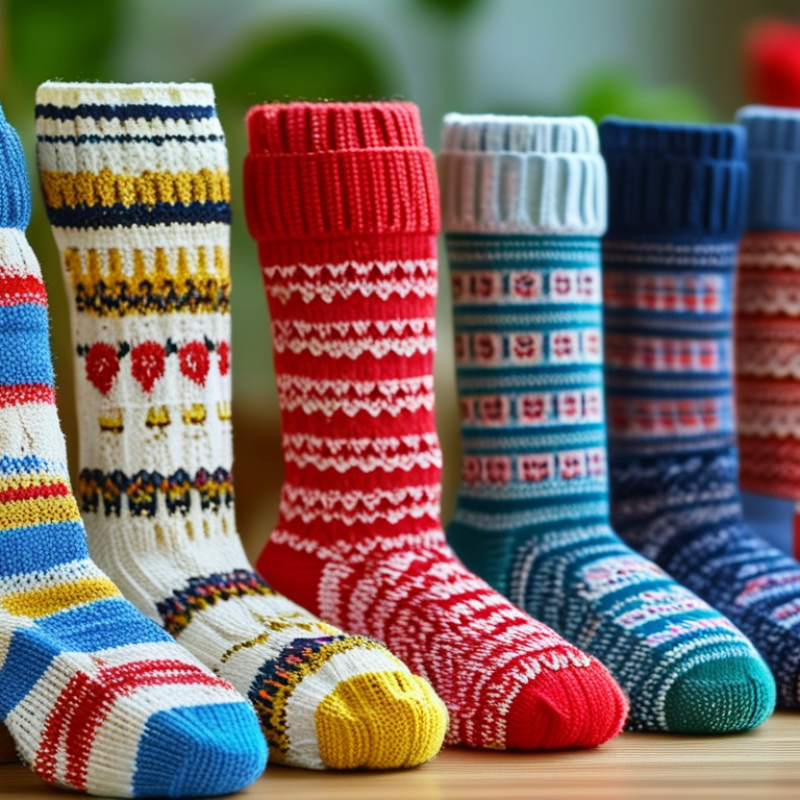
A reliable 360 sock printing supplier proves its ability through production details, not attractive promises. They should explain how designs remain aligned around the entire sock. Ask for physical samples with fine lines, gradients, and repeated patterns. A useful sample shows the heel, toe, cuff, and side panels clearly. Small defects matter. They often reveal weak calibration or rushed inspection.
Material knowledge is equally important. Cotton blends, recycled fibers, and performance yarns absorb ink differently. Experienced suppliers recommend suitable settings before accepting a large order. They should discuss color tolerances, wash testing, stretch recovery, and fabric comfort. Request a pre-production sample and compare it under natural light. Digital previews can look perfect, but fabric may soften contrast. That gap deserves attention.
Reliable suppliers also provide traceable quality controls. Look for documented inspections, batch records, packaging checks, and clear replacement policies. Their communication should include realistic production times and direct answers about delays. Ask how they handle registration errors or uneven color between batches. No supplier is flawless. In my view, an honest response to a failed sample is more valuable than a confident guarantee. Still, every correction should be recorded, measured, and approved before production continues. Suppliers serving global buyers should also provide material information and shipping documents that support lawful, transparent trade.
Seven Leading 360 Sock Printing Suppliers for Global Buyers
Seven Leading 360 Sock Printing Suppliers for Global Buyers
Global buyers now expect sharper artwork, flexible quantities, and dependable delivery. Grand View Research valued the digital textile printing market at about USD 2.5 billion in 2022. It also projected strong growth through 2030. This supports demand for 360-degree sock printing, especially in sportswear, uniforms, and promotional apparel.
The seven leading supplier profiles serve different purchasing needs. The first focuses on low minimum orders and fast sampling. The second specializes in high-volume production with automated knitting lines. The third offers recycled polyester yarn and documented material traceability. The fourth provides advanced color calibration for detailed, continuous artwork. The fifth supports private-label packaging and export documentation. The sixth combines printing with reinforced toes, heels, and arches. The seventh provides technical assistance for artwork sizing, file preparation, and wash testing.
Ask for physical samples.
Professional buyers should inspect print alignment around the ankle and sole. They should also compare color results under daylight and indoor lighting. Textile Exchange reported that polyester remained the dominant global fiber in 2022, making yarn composition an important sourcing issue. However, recycled content claims require certification, not attractive wording alone. I have seen suppliers promise “premium clarity” without defining resolution or wash durability. That is a warning sign. A practical evaluation should record minimum order quantity, sample lead time, fabric blend, ink process, shrinkage rate, packaging details, and delivery terms. No supplier performs perfectly across every category.
7 Best 360 Sock Printing Suppliers for Global Buyers - Seven Leading 360 Sock Printing Suppliers for Global Buyers
| Supplier Profile | Primary Service Region | 360° Printing Method | Typical MOQ | Sample Lead Time | Bulk Lead Time | Common Sock Materials | Customization | Export Readiness |
| Supplier Profile 1 | East Asia and worldwide | Sublimation transfer for all-over polyester designs | 50–100 pairs | 5–10 business days | 15–25 business days | Polyester, recycled polyester, cotton blends | High | High |
| Supplier Profile 2 | South Asia and international markets | Rotary or digital transfer printing | 100–300 pairs | 7–12 business days | 20–35 business days | Cotton, combed cotton, elastane blends | High | Medium–High |
| Supplier Profile 3 | Europe and North America | Direct-to-garment digital printing | 25–100 pairs | 3–7 business days | 10–20 business days | Polyester, nylon, cotton-polyester blends | High | High |
| Supplier Profile 4 | East Asia, Oceania, and North America | Knitted-in artwork with full-circumference jacquard construction | 300–500 pairs | 10–15 business days | 25–40 business days | Cotton, acrylic, nylon, wool blends | Medium–High | High |
| Supplier Profile 5 | North America and domestic fulfillment markets | On-demand sublimation printing | 1–25 pairs | 3–8 business days | 7–15 business days | Polyester and synthetic performance fibers | High | High |
| Supplier Profile 6 | Southeast Asia and global wholesale markets | Screen printing for selected panels and all-over layouts | 500–1,000 pairs | 10–18 business days | 30–45 business days | Cotton, polyester, bamboo blends | Medium | Medium–High |
| Supplier Profile 7 | Europe, the Middle East, and international buyers | Digital printing combined with private-label sock production | 100–250 pairs | 7–14 business days | 20–35 business days | Organic cotton, recycled polyester, elastane blends | High | High |
Note: Lead times and minimum order quantities are typical industry ranges and may vary according to design complexity, material availability, order volume, packaging requirements, and destination.
Comparing Printing Quality, Materials, Pricing, and Production Capacity
7 Best 360 Sock Printing Suppliers for Global Buyers
When comparing seven 360 sock printing suppliers, inspect print quality before headline pricing. Check color accuracy, edge definition, stretch recovery, and wash durability. Full-surface printing often reveals weak registration around the heel and toe. Ask for physical samples, not only digital mockups. AATCC 61 testing can help assess colorfastness after repeated washing. Results should include test conditions and fabric composition.
Materials also affect comfort and production stability. Textile Exchange’s Materials Market Report 2024 states that global fiber production reached 124 million tonnes in 2023. Polyester represented about 57% of total output. Recycled polyester may support sustainability goals, but its hand feel can vary. Cotton-rich blends usually feel softer, while synthetic blends often hold sharper colors. Pricing should include setup fees, sampling, packaging, and shipping. Low unit prices can hide capacity limits. Ask for monthly output, minimum order quantities, and peak-season lead times. One weakness in this comparison is that supplier capacity figures are often self-reported.
Tips: Request the same artwork and sock specification from all seven suppliers. Compare one sample, one wash test, and one bulk-production quote. Check whether quoted capacity covers consistent quality. A fast factory is not always a reliable one. Small details matter. Also review response speed, inspection records, and corrective-action procedures before selecting a long-term partner.
Assessing Shipping, Customization, Minimum Orders, and Lead Times
Choosing among seven 360 sock printing suppliers requires more than comparing unit prices. Shipping performance can change the real cost. Ask whether quotes include packaging, customs documents, tracking, and delivery to your country. Request separate estimates for air, sea, and courier services. A supplier with a lower product price may charge more for urgent freight.
Customization should cover full-surface artwork, fabric composition, size grading, cuff options, and color matching. Ask for a digital proof and a physical sample before approving production. Check the heel, toe, and side seams carefully. These areas often distort detailed graphics. Details matter. Confirm whether sample fees are refundable.
Minimum order quantities differ widely. Some suppliers accept small test runs, while others require several hundred pairs per design. A flexible minimum can reduce inventory risk for new collections. Lead times also need precise wording. Separate sampling days from production days, then add time for inspection and shipping. In practical sourcing reviews, quoted deadlines sometimes exclude artwork approval. That gap matters. Ask how delays are handled, and whether reprints cover manufacturing defects. Documentation, responsive communication, and consistent inspection records are stronger reliability signals than polished sales language. One weakness remains: supplier schedules can shift during peak seasons, even after approval. Build a modest buffer into launch planning.
7 Best 360 Sock Printing Suppliers for Global Buyers
Comparative assessment of shipping reach, customization flexibility, minimum-order convenience, and lead-time performance
Scores are normalized from 0 to 100 for anonymous supplier profiles. Higher scores indicate broader international shipping coverage, more customization options, lower minimum-order barriers, and faster production lead times. Final terms should be confirmed directly before ordering.
How to Choose the Right Supplier for Your International Order
7 Best 360 Sock Printing Suppliers for Global Buyers
How to Choose the Right Supplier for Your International Order
Choosing among seven shortlisted suppliers requires more than comparing unit prices. Request one physical sample with full 360-degree coverage, including the toe, heel, ankle, and inner cuff. Check whether the artwork remains aligned after washing. A beautiful sample can still fail. Ask for the knitting composition, print method, minimum order quantity, production lead time, and packaging details. Suppliers should also provide clear commercial invoices, packing lists, and agreed Incoterms for international delivery.
Material verification matters. Textile Exchange’s Materials Market Report 2024 states that global fiber production reached 124 million tonnes in 2023. It may reach 160 million tonnes by 2030. This growth increases the need for traceable fibers and accurate composition claims. Request test reports for colorfastness, shrinkage, abrasion, and restricted substances. AATCC washing and colorfastness methods can support more consistent comparisons. In my experience, suppliers often describe “premium cotton” without specifying the percentage. That wording deserves caution.
Evaluate communication before placing a large order. Can the supplier explain artwork tolerances in simple English? Do they answer technical questions with measurements and dated documents? Confirm payment stages, replacement terms, inspection procedures, and shipping insurance. Digital textile printing continues to expand, according to Smithers’ The Future of Digital Textile Printing to 2028 report. However, growth does not guarantee quality. I would start with a small paid trial, record every defect, and review the decision honestly before scaling.